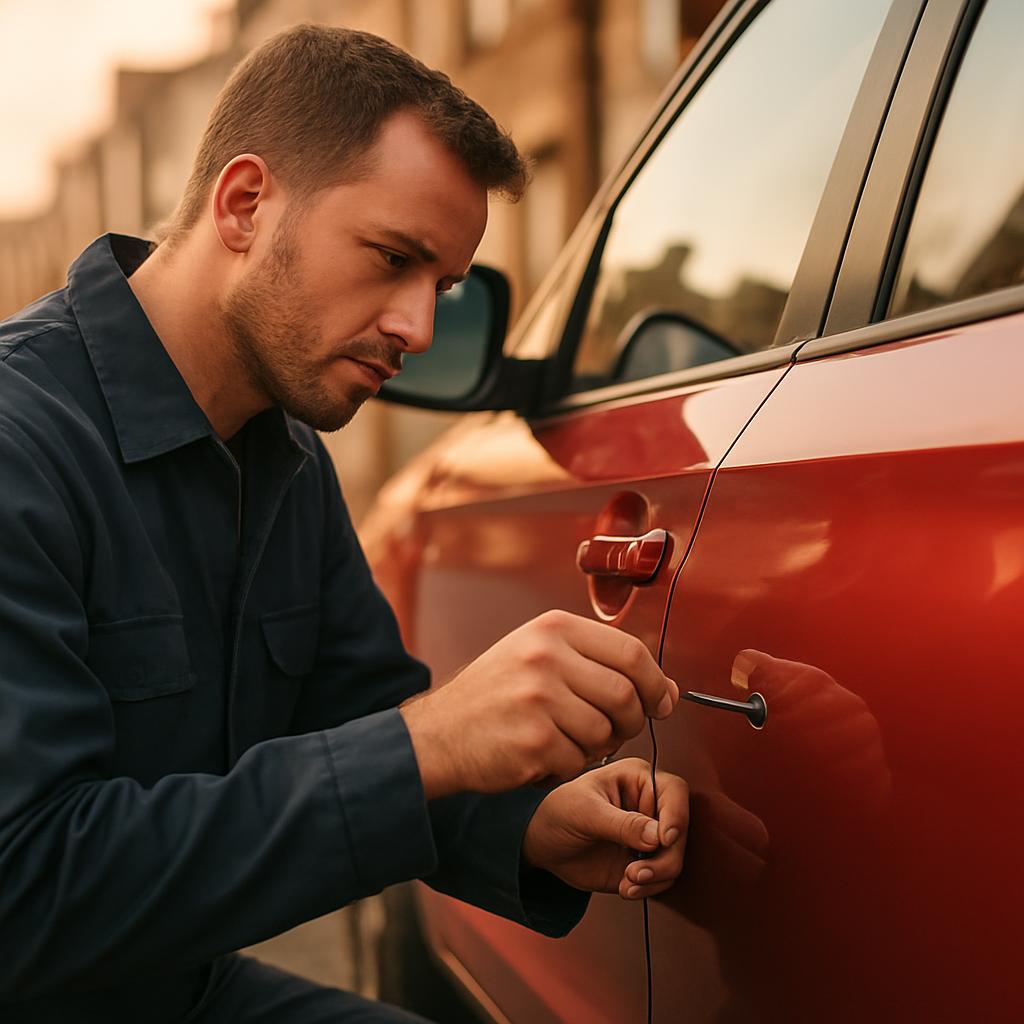
Car Lock Failures While Driving: What's Really Happening
Find Out More →Your car's lock actuator—the motor-driven mechanism that controls the door locks—has either failed, or an electrical fault is triggering the locks to engage unexpectedly. This isn't usually a sign of a break-in attempt; it's a mechanical or wiring problem inside the door itself, and it needs proper diagnosis before you assume you need a replacement lock or new electrics.
If you're driving around Southbourne and your doors suddenly lock while you're moving, that moment of panic is real. But before you worry it's a serious security breach, know this: most random lock-ups come from a failing actuator, a corroded electrical connection, or a faulty door control module—not from someone trying to trap you in your car. The good news is that the right locksmith can diagnose exactly what's happening.
What's Actually Going Wrong Inside Your Lock
Modern car doors use an electric motor (the actuator) to move the lock rod up and down. When that motor gets old, wet, or corroded—especially living here near Southbourne's coast where salt spray and dampness are constant—it can stick, misfire, or send false signals to the control module. That's why your lock might engage without you touching the button.
Water damage is the most common culprit. The seals around your door can degrade, and salt air accelerates corrosion inside the mechanism. The actuator itself sits inside the door panel, so it's exposed to moisture from rain and—if you've ever parked near the seafront after rough weather—spray.
A second cause is the door control module, the small computer that manages all the locking and unlocking signals. If a connection corrodes or the module develops a fault, it can send a lock command at random, even while you're driving. This is less common but more serious because it usually means the whole module needs replacement.
Lastly, a stuck or failing door latch can sometimes feel like the lock is engaging when actually the latch is binding—though this typically happens on opening and closing, not mid-drive.
How to Tell If Your Lock Needs a Locksmith or a Mechanic
This is where it gets tricky. If your locks are engaging randomly while driving, you do need professional help, but not necessarily a garage mechanic first. A locksmith with electrical knowledge can diagnose whether the fault is in the lock mechanism itself or whether it's a deeper wiring or module problem that needs a mechanic.
A real locksmith knows the difference—and a good one will be honest about when to refer you to a garage if the issue is beyond lock mechanism repair.
Red flags that mean you need professional help right now: the locks are engaging while moving (safety risk), they won't unlock when you need them to, or they lock and unlock repeatedly without any input from you. Don't assume it'll go away. Intermittent electrical faults usually get worse.
Why Choosing the Right Locksmith in Southbourne Matters
When your car locks are acting up, you need someone who understands both the mechanical lock and the electrical side. Not all locksmiths do. Some are trained purely on picking and replacing locks; others understand vehicle electronics. You need the second type.
A proper locksmith will: plug in a diagnostic tool to read error codes from your vehicle's computer, test the actuator under power to see if it's responding correctly, check for corrosion in the door connectors, and test the control module signals. That takes time and the right equipment—and it's absolutely worth paying for, because a misdiagnosis can lead to expensive unnecessary repairs.
Before you book, ask directly: "Do you diagnose car lock electrical faults, or do you just replace locks?" The answer tells you everything. Our guide on what to expect when you call a locksmith covers the questions to ask.
What It'll Cost and What Happens Next
A diagnostic visit to identify whether it's the actuator, wiring, or control module typically costs £50–£120, depending on how much fault-finding is needed. If it's a failed actuator, replacement usually runs £80–£200 depending on your car model. If it's a module or deeper electrical fault, that jumps to £200–£500 because the repair is more involved.
Yes, that range is wide. Your actual cost depends on whether the part can be repaired or needs replacing, and how accessible it is in your specific vehicle. A good locksmith will quote you after diagnosis, not before.
One thing: don't ignore this in the hope it stops on its own. Random lock engagement is a safety risk—it can trap passengers, interfere with emergency exits, and signal a deeper electrical problem that could affect other door functions or even the central locking system as a whole.
Your Next Move
If your car's locks are randomly engaging or failing while you're driving, you need a proper diagnosis from someone who understands vehicle electrics. Read more about what happens when you call a locksmith, and then get in touch with Locksmith Southbourne. We'll identify exactly what's wrong, explain your options, and get it sorted without guesswork or unnecessary repairs. Call us for a diagnostic appointment—it's the fastest way to get your locks working safely again.
Looking for Locksmith near Southbourne?
We have secure, flexible units available in the area. Get in touch with Locksmith Southbourne today.
Find Out More →